

This post covers a few core ideas — history, human nature, systems, and meaning — that explain far more than most advice ever will
Most of what people struggle with in life isn’t actually that complicated.
It feels complicated because nobody explains the basics clearly. Instead, we get theories, opinions, and endless advice — most of it disconnected from how humans actually work and how the modern world actually formed.
This blog exists to talk about a few core ideas that explain a lot once you see them. No mysticism. No hype. No pretending life is harder than it needs to be.
Just plain observations.
If you don’t understand recent history, nothing makes sense
People love talking about Ancient Greece and Rome. It sounds intelligent.
But honestly, if you don’t understand recent history, you don’t understand the world you’re living in.
You don’t need to go back thousands of years. For modern life, starting around the Seven Years’ War (1756–1763) is enough. That war was basically the first real world war — fought across Europe, North America, Africa, and Asia.
That’s when global empires really lock in.
That’s when trade becomes worldwide.
That’s when borders start being drawn far away from the people who have to live under them.
That’s why some African countries speak French.
That’s why borders don’t match cultures.
That’s why power feels distant and abstract.
Ancient history is interesting.
Recent history explains why things are the way they are.
The Second Industrial Revolution is what shaped modern life

Here’s the part most people miss.
The Second Industrial Revolution — late 1800s into the early 1900s — is what actually created the world we’re living in now.
This is when:
- electricity spreads
- factories scale massively
- machines replace human labor
- cities explode
- work becomes repetitive and specialized
Before this, most people:
- made things
- saw the result of their work
- lived close to cause and effect
After this?
You do one tiny task inside a massive system you don’t understand, for outcomes you’ll never see.
That messes with the human mind.
Humans didn’t evolve for this environment

Humans evolved for:
- small groups
- physical effort
- clear feedback
- visible consequences
Modern life is:
- abstract
- anonymous
- system-driven
- delayed in its consequences
You can do everything “right” and still feel lost.
You can work hard and feel replaceable.
You can be comfortable and still anxious.
That’s not because something is wrong with you.
It’s because the environment changed faster than the human mind did.
Your mind reacts before you think — every time

Most people think they choose what things mean.
They don’t.
Your body reacts first — instantly — and then you become aware of it. That reaction is what gives you a sense of “me”: my beliefs, my reactions, my story.
This isn’t mystical. It’s mechanical.
That reaction system exists so you can maintain identity across time. Without it:
- you wouldn’t recognize yourself tomorrow
- you couldn’t plan
- you couldn’t care about consequences
That’s why emotions hit before logic.
That’s why people sometimes speak before thinking.
That’s why meaning gets assigned automatically.
Humans are incredible interpreters of reality — possibly the best the universe has produced so far.
That’s our strength.
It’s also our danger.
From nature’s perspective, humans are extraordinary
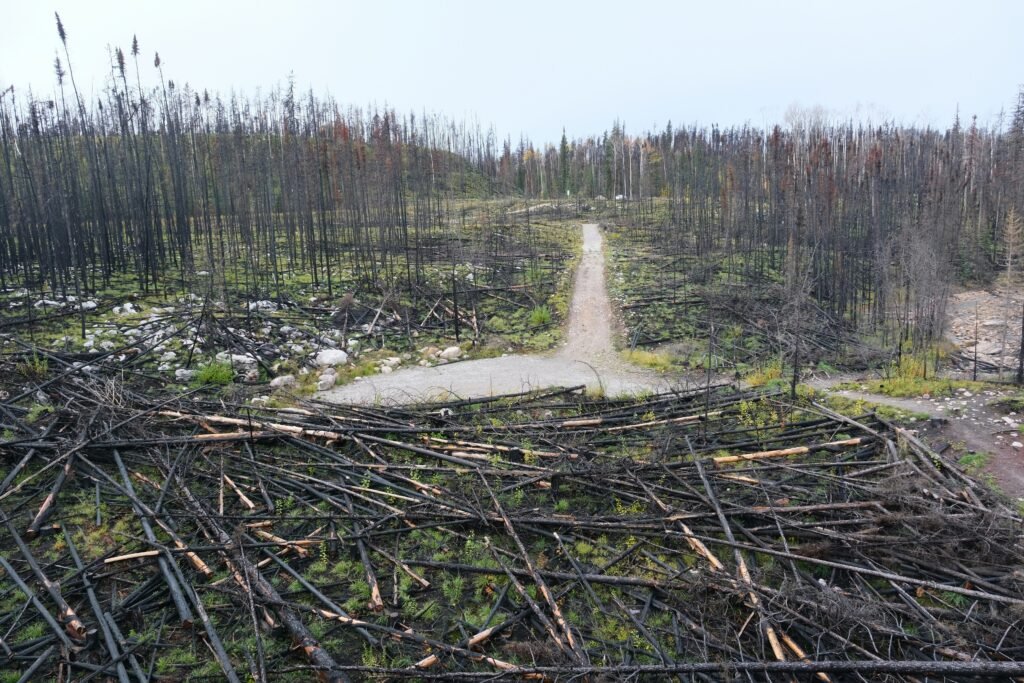
From a purely natural point of view, humans are insane.
We are conscious.
We reshape ecosystems.
We redirect rivers.
We split atoms.
We leave the planet.
In that sense, humans are nature becoming aware of itself.
But here’s the problem: instead of using that awareness wisely, we often act blindly. Short-term incentives, imitation, and disconnection from reality push us to destroy the very systems that made us possible.
That’s why many scientists talk about a sixth mass extinction — the only one caused by a conscious species.
Intelligence alone isn’t enough.
Alignment matters.
We don’t actually know our past as well as we thinkHuman history didn’t start with writing.
There were advanced societies long before written records — including prehistoric Malta. These societies:
- built complex stone temples
- understood astronomy
- showed little evidence of violence
- focused on fertility and continuity, not dominance
They didn’t collapse because they were stupid.
They likely collapsed because they mastered their environment too well and exhausted it.
The same thing happened on Easter Island.
There’s a clear pattern in human history:
mastery without restraint leads to collapse.
Being modern doesn’t make us immune to that pattern.
Human nature didn’t suddenly change
Modern humans didn’t appear out of nowhere.
We came through:
- Homo erectus (~2 million years ago)
- walked fully upright
- largely hairless
- used fire
- made tools
- hunted cooperatively
- threw spears and projectiles
- Homo heidelbergensis (~700,000–200,000 years ago)
- larger brains
- advanced tools
- built shelters
- organized hunting
- clear evidence of warfare and violence
- Modern humans (Homo sapiens) (~300,000 years ago)
- same core drives
- same emotional wiring
- same aggression and cooperation
- massively amplified by language and abstraction
- endlessly scan and interpret the environment
Our ancestors were intelligent, social, tool-using — and often violent.
Weapons appear early.
Large animals disappear wherever humans arrive.
Conflict existed long before recorded history.
Culture exists because intelligent, social animals with impulse and aggression need structure to coexist.
That hasn’t changed.
Only the scale has.
The systems you live in are designed — not natural
Schools and universities aren’t neutral.
Neither is work.
You’re rewarded for:
- repeating expected answers
- following instructions
- not questioning the structure itself
You’re punished — subtly or directly — for stepping outside that.
Work is similar, except now your survival depends on it. Your superiors aren’t just authority figures — they control your income, stability, and ability to plan a future.
Understanding this isn’t about rebellion.
It’s about not confusing the system with reality.
Planning matters more than motivation
Most people are stressed because they don’t think far enough ahead.
You don’t need a perfect life plan, but you do need to think in five-year blocks:
- money
- skills
- health
- location
Budgeting isn’t about restriction.
It’s about clarity.
If you don’t decide where your life is going, it will drift into whatever path offers the least resistance.
Perspective and gratitude keep you sane
Even people struggling in the West live better than most humans who have ever existed.
On a global scale, even modest Western incomes place you in the top few percent of the world.
That doesn’t erase suffering.
It gives perspective.
Gratitude isn’t pretending everything is perfect.
It’s recognizing the ground you’re standing on before deciding your next move.
The only real task in life
Strip everything else away, and most people are confused about one thing:
They chase what society installs in them — status, money, approval — instead of what they naturally gravitate toward.
That’s why ideas like ikigai resonate.
Not because they’re mystical, but because they point to something simple:
The only sustainable path is aligning your life with what genuinely pulls you — not what was installed through fear, comparison, or conditioning.
Everything else leads to quiet resistance and burnout.
What this blog is about
This site exists to talk about:
- how the world actually formed
- how humans actually function
- why systems behave the way they do
- and how to live more clearly inside all of it
No mysticism.
No motivational bullshit.
No pretending complexity is depth.
If this way of seeing the world resonates, you’ll probably come back.
And if it doesn’t, that’s fine too.
Either way — these are the ideas that matter.
References & Further Reading
1. Recent history, Seven Years’ War, global systems
Seven Years’ War as the first world war
- Britannica – Seven Years’ War
https://www.britannica.com/event/Seven-Years-War - Fred Anderson, Crucible of War (overview article)
https://www.historytoday.com/archive/crucible-war
Colonial borders & language spread
- “The Scramble for Africa” – Britannica
https://www.britannica.com/event/Scramble-for-Africa - Why African countries speak European languages – Vox
https://www.vox.com/2014/7/14/5893609/why-africans-speak-european-languages
2. Second Industrial Revolution & modern life
Second Industrial Revolution
- Britannica – Second Industrial Revolution
https://www.britannica.com/event/Second-Industrial-Revolution - History.com – Industrial Revolution effects
https://www.history.com/topics/industrial-revolution/industrial-revolution
Loss of meaning & abstraction of work
- David Graeber – Bullshit Jobs (summary)
https://www.strike.coop/bullshit-jobs/ - Max Weber – The “iron cage” of bureaucracy (overview)
https://plato.stanford.edu/entries/weber/
3. Human evolution, violence, and culture
Human evolution (erectus → heidelbergensis → sapiens)
- Smithsonian – Human Evolution Timeline
https://humanorigins.si.edu/evidence/human-evolution-timeline - Britannica – Homo heidelbergensis
https://www.britannica.com/topic/Homo-heidelbergensis
Violence and early humans
- Steven Pinker – prehistoric violence discussion
https://www.nature.com/articles/46626 - Archaeological evidence of early weapons
https://www.scientificamerican.com/article/early-humans-used-projectile-weapons/
(Note: scholars disagree on interpretation — which is the point.)
4. Ego, reaction-before-thought, human interpretation
Fast reaction vs slow thinking
- Daniel Kahneman – System 1 & System 2 (overview)
https://www.simplypsychology.org/kahneman.html - Neuroscience of emotion before cognition
https://www.ncbi.nlm.nih.gov/pmc/articles/PMC3181631/
Sense of self and continuity
- Stanford Encyclopedia – Personal identity
https://plato.stanford.edu/entries/identity-personal/
5. Humans as a geological force / mass extinction
Sixth mass extinction
- National Geographic – Are we in a sixth extinction?
https://www.nationalgeographic.com/science/article/150609-sixth-extinction-kolbert-animals-conservation-science - IPBES biodiversity loss report
https://www.ipbes.net/global-assessment
6. Prehistoric Malta & collapse through overuse
Malta prehistoric temples
- UNESCO – Megalithic Temples of Malta
https://whc.unesco.org/en/list/132/ - Violence absence in Neolithic Malta (overview)
https://www.sciencedirect.com/science/article/pii/S027737911300109X
Easter Island collapse
- Smithsonian – Rapa Nui collapse
https://www.smithsonianmag.com/science-nature/what-happened-to-the-people-of-easter-island-180952655/
7. Systems, obedience, schooling, and work
Schooling & obedience
- John Taylor Gatto – “Against School”
https://harpers.org/archive/2003/09/against-school/ - Michel Foucault – Discipline & institutions (overview)
https://plato.stanford.edu/entries/foucault/
Modern work & power structures
- Weber on bureaucracy
https://plato.stanford.edu/entries/weber/
8. Planning, money, and perspective
Long-term thinking
- Stanford – Delayed gratification & planning
https://stanfordmag.org/contents/the-marshmallow-test - Naval Ravikant on long-term leverage (talk)
https://nav.al/rich
Global income perspective
- World Bank – Global income distribution
https://www.worldbank.org/en/topic/poverty - Our World in Data – Income inequality
https://ourworldindata.org/income-inequality
9. Ikigai & natural pull
Ikigai (non-mystical explanation)
- BBC – Ikigai explained without hype
https://www.bbc.com/worklife/article/20200106-ikigai-the-japanese-concept-that-can-make-life-meaningful - Critique of commercialized ikigai
https://medium.com/@ikigaiisnotwhatyouthink